Book Appointment Now

Lip Enhancement in 2026: Types, Cost, Results, Benefits and Risks
Lip Enhancement in 2026: Types, Cost, Results, Benefits, Recovery and Risks
Lip enhancement has changed a lot in recent years.
People no longer have to choose between very subtle results and an obviously enlarged look.
Modern treatments can add volume, improve lip shape, define the border, soften lines,
and restore volume lost with age.
The biggest question is not simply, “How can I make my lips bigger?”
It is, “Which lip enhancement option will give me the result I actually want?”
Some people want fuller lips without surgery. Others want better definition rather than
more volume. Some want a long-lasting change, while others prefer a treatment that can
be adjusted or reversed.
This guide explains the main lip enhancement options available in 2026,
including lip fillers, fat transfer, lip lifts, and implants. It also covers cost,
recovery, before and after results, safety, side effects, and the questions you should
ask before treatment.
What Is Lip Enhancement?
Lip enhancement is a cosmetic treatment designed to improve the size, shape,
definition, balance, or appearance of the lips.
The term covers several treatments. The most common non-surgical option is injectable
dermal filler. Surgical choices include a lip lift, lip implants, and fat transfer.
Topical lip-plumping products can also create a temporary fuller appearance.
The American Society of Plastic Surgeons lists dermal fillers as an option for
plumping thin lips and improving facial contours.
The right treatment depends on your starting lip shape, desired result, budget,
health, and how long you want the change to last.
Why Are People Choosing Lip Enhancement?
The reasons vary from person to person. Some people naturally have thin lips.
Others notice changes as they get older.
Aging can reduce facial volume and change the relationship between the upper lip,
lower lip, and surrounding skin. Fine lines around the mouth can also become more visible.
Lip enhancement can address several concerns at once. A carefully planned treatment
may improve lip fullness while also creating better definition.
Common goals include:
- Adding volume to thin lips
- Creating a more defined lip border
- Improving upper and lower lip balance
- Restoring volume lost with age
- Improving lip symmetry
- Softening the appearance of vertical lip lines
- Creating a more defined Cupid’s bow
- Improving the appearance of a downturned mouth
- Creating a fuller but natural-looking smile
Types of Lip Enhancement in 2026
There is no single best lip enhancement treatment for everyone.
The main options have different benefits, limitations, costs, and recovery times.
1. Lip Filler
Lip filler is the most popular non-surgical form of lip enhancement.
Most modern lip fillers used for the lips contain hyaluronic acid, often called HA.
Hyaluronic acid is naturally found in the body. In injectable fillers,
it is formulated to add volume and improve the shape of soft tissue.
A qualified medical provider injects small amounts of filler into selected areas.
The provider may focus on the lip border, body of the lips, Cupid’s bow,
or areas that need better balance.
One major advantage of hyaluronic acid lip filler is that it can be dissolved
with hyaluronidase when medically appropriate.
Cleveland Clinic notes that lip fillers commonly last around 12 to 18 months,
although the duration varies between individuals and products.
2. Fat Transfer Lip Enhancement
Fat transfer uses fat taken from another part of your body.
The fat is processed and then injected into the lips.
This can provide a longer-lasting form of lip enhancement than temporary fillers.
However, the procedure is more involved because fat must first be collected.
Not all transferred fat survives. Some of the injected fat may be absorbed by the body,
so the final result can differ from the immediate post-treatment appearance.
3. Lip Lift
A lip lift is a surgical procedure that changes the distance between the nose
and upper lip.
Instead of simply adding volume, a lip lift can expose more of the upper lip.
This can make the upper lip appear fuller without injecting filler.
A lip lift is generally considered a permanent structural change.
However, the face will continue to age naturally after surgery.
4. Lip Implants
Lip implants are another surgical option. A surgeon places an implant inside the lips
through small incisions.
Implants can provide long-term volume, but they are more invasive than injectable filler.
They also involve surgical risks and recovery.
5. Lip-Plumping Products
Lip plumping glosses and creams provide a temporary cosmetic effect.
They do not produce the same structural change as injectable or surgical treatments.
Some products create a temporary swelling or tingling effect using ingredients
such as cinnamon, ginger, mint, or capsaicin.
These products may be useful when you want a short-term change without injections.
They are not a substitute for medical lip enhancement.
Lip Enhancement With Hyaluronic Acid Filler
Hyaluronic acid filler is one of the most commonly discussed options for modern
lip enhancement.
The material adds volume beneath the skin and can be placed in precise areas.
This allows the provider to focus on shape instead of simply making the lips larger.
A good treatment should consider the entire mouth area. Increasing volume without
considering facial proportions can create an unnatural result.
The goal may be a subtle increase rather than maximum fullness.
In fact, smaller amounts can sometimes produce a better result when lip definition
is the main concern.
What Can Lip Enhancement Improve?
Lip enhancement is not only about making lips bigger.
The treatment can be planned around several different concerns.
Thin Lips
People with naturally thin lips may use filler or another procedure to increase
lip volume. Treatment can focus on the upper lip, lower lip, or both.
Uneven Lips
Mild asymmetry is normal. However, a provider may use small amounts of filler
to improve visible differences between the two sides.
Lip Definition
Some people do not want significantly larger lips. They want sharper borders
and a clearer Cupid’s bow.
Age-Related Volume Loss
Lips can lose volume and definition with age. Fine lines around the mouth may also
become more noticeable.
A carefully planned lip enhancement can restore some lost volume while keeping
the result proportional to the rest of the face.
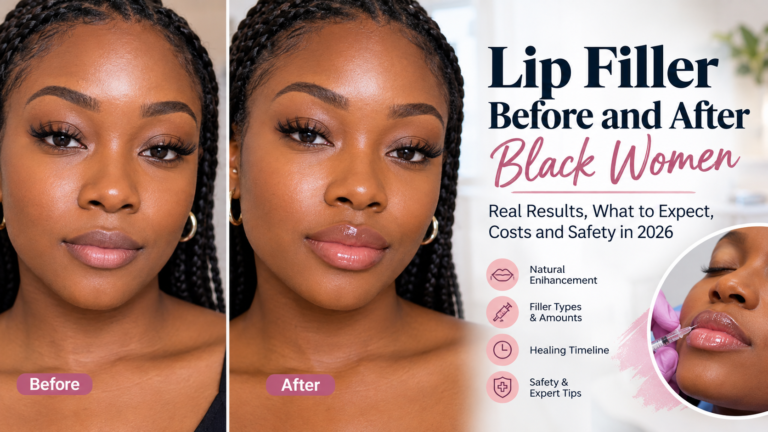
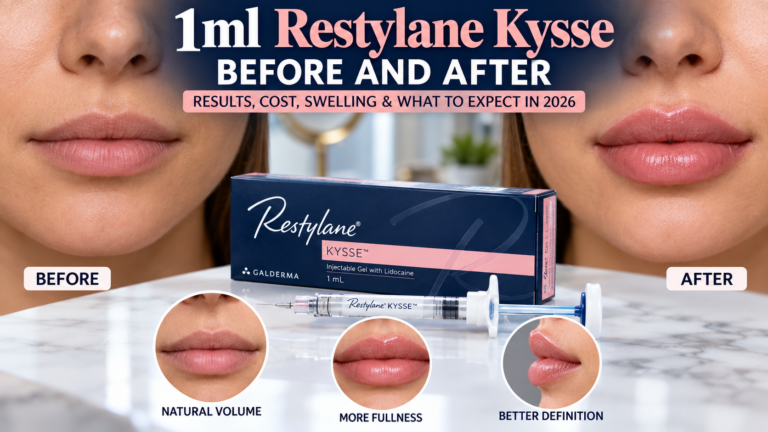
Lip Enhancement Before and After: What Results Should You Expect?
Lip enhancement before and after photos can be useful when researching
treatment, but they should not be treated as a guarantee of your own result.
Lip shape, skin thickness, facial structure, age, filler type, injection technique,
and the amount used can all affect the outcome.
With injectable filler, some fullness is visible immediately. However, swelling can
make the lips look larger than the final result during the first few days.
Cleveland Clinic reports that swelling often improves within days, although complete
settling can take longer.
This is why judging your result immediately after treatment can be misleading.
When comparing before and after photos, look at more than size. Pay attention to:
- Upper and lower lip balance
- Cupid’s bow definition
- Lip border definition
- Symmetry
- Smile appearance
- Profile appearance
- Proportion to the nose and chin
- Whether the result still looks natural when the person smiles
How Long Does Lip Enhancement Last?
The answer depends on the treatment.
Hyaluronic acid lip fillers are temporary. Many patients maintain results with
periodic treatments because the filler gradually breaks down.
Cleveland Clinic reports that lip fillers commonly last about 12 to 18 months,
although individual results vary.
Fat transfer can last much longer because surviving transferred fat can remain
in the treated area. The result is less predictable than a temporary filler.
Lip lifts and implants are considered long-term or permanent procedures,
although future changes can occur because your face continues to age.
If you want to try lip enhancement for the first time, temporary filler can be
attractive because you are not committing to a permanent surgical change.
How Much Does Lip Enhancement Cost in 2026?
There is no single price for lip enhancement.
The total cost depends on the treatment, provider, location, product, and amount required.
Injectable filler is usually priced by syringe or treatment.
Surgical procedures are priced differently because they include surgical and facility costs.
Factors that can affect your final price include:
- The type of treatment
- The filler brand and formulation
- The amount of filler required
- The provider’s experience
- The clinic’s location
- Whether consultation fees are charged separately
- Whether follow-up treatment is needed
- Whether additional procedures are performed
Be careful with unusually cheap lip enhancement offers.
Price should never be the only factor when choosing an injector or surgeon.
The FDA warns consumers against buying dermal fillers directly from the public
and emphasizes that fillers should be administered by qualified healthcare professionals.
Is Lip Enhancement Safe?
Lip enhancement can be safe when performed by a qualified medical professional,
but no cosmetic procedure is risk-free.
The FDA lists common filler side effects such as bruising, redness, swelling,
pain, tenderness, itching, and rash.
More serious complications are uncommon but can occur.
These include infection, tissue death, and accidental injection into a blood vessel.
An accidental injection into a blood vessel can cause serious injury.
Reported complications can include tissue necrosis, vision problems, and stroke.
This is one reason choosing a qualified injector matters so much.
Who Should Perform Lip Enhancement?
Choose a qualified healthcare professional with specific experience in facial injections
or cosmetic facial surgery.
Your provider should understand facial anatomy, injection technique, product selection,
and how to manage complications.
The American Society of Plastic Surgeons recommends proper evaluation before dermal
filler treatment, including assessment of facial appearance and treatment areas.
Avoid choosing an injector simply because the treatment is cheap or because their
social media photos look impressive.
Ask who will perform the injection, what product will be used, whether the product
is approved for the intended use, and what happens if a complication occurs.
What Happens During Lip Filler Treatment?
A typical lip filler appointment starts with a consultation.
Your provider examines your lips and discusses your desired result.
The treatment area is cleaned before injection. A topical anesthetic, local anesthetic,
cooling method, or filler containing lidocaine may be used to reduce discomfort.
The provider then injects small amounts of filler into selected areas.
The exact technique depends on your anatomy and the desired result.
The American Society of Plastic Surgeons describes facial assessment, treatment mapping,
cleansing, and anesthetic preparation as parts of the dermal filler process.
The procedure itself is usually short, but you should allow enough time for consultation
and aftercare instructions.
Is Lip Enhancement Painful?
Most people describe lip filler treatment as uncomfortable rather than severely painful.
The lips are sensitive, so you may feel pressure, pinching, or brief stinging.
Numbing cream or local anesthetic can reduce discomfort.
Mild tenderness can remain after the procedure.
Pain that becomes severe or unusual should not be ignored.
Lip Enhancement Recovery
Recovery depends on the procedure. Injectable lip filler usually has much less downtime
than surgery.
Swelling, redness, tenderness, and bruising can occur after injections.
These effects usually improve as the lips settle.
Cleveland Clinic recommends giving the lips time to heal before judging the final result.
If you have an important event coming up, do not schedule your first lip filler treatment
immediately before the event.
Your provider may also give you specific instructions about exercise, alcohol,
smoking, dental work, and pressure on the lips.
What Should You Avoid After Lip Enhancement?
Follow the instructions given by your provider because aftercare can vary.
Common advice includes avoiding unnecessary pressure on the treated area.
Cleveland Clinic also advises patients to avoid smoking and drinking through straws
for a period after lip filler treatment.
You should also follow your provider’s instructions about exercise and alcohol.
If you are unsure about an activity, ask before doing it.
When Will Lip Enhancement Look Natural?
The answer depends on the treatment and how much swelling you develop.
Freshly injected lips can look larger than expected because of temporary swelling.
This does not necessarily represent the final result.
Cleveland Clinic notes that complete settling can take longer than the first few days.
Give your lips time before deciding whether you need additional filler.
A natural result should look balanced with your facial features.
Bigger is not automatically better.
Natural-Looking Lip Enhancement
Natural-looking lip enhancement starts with a clear goal.
Instead of asking for “the biggest lips possible,” explain what you want changed.
You may want more definition, a slightly fuller upper lip, better symmetry,
or restoration of lost volume.
Starting with a conservative amount can make it easier to judge the result.
Additional treatment can be considered later if appropriate.
The best lip enhancement is often the one that looks like you,
rather than the one that immediately attracts attention to the procedure.
Lip Enhancement for Thin Lips
Lip filler can be used to enhance naturally thin lips.
The treatment does not need to make thin lips dramatically larger.
A provider can focus on creating more visible lip structure.
This may involve the lip border, Cupid’s bow, or the central body of the lips.
Thin lips also need careful treatment because excessive filler can create an
overfilled appearance.
A consultation should cover how much volume you want and how the result should look
from the front, side, and during a smile.
Lip Enhancement for Older Adults
Lip enhancement is not limited to younger adults.
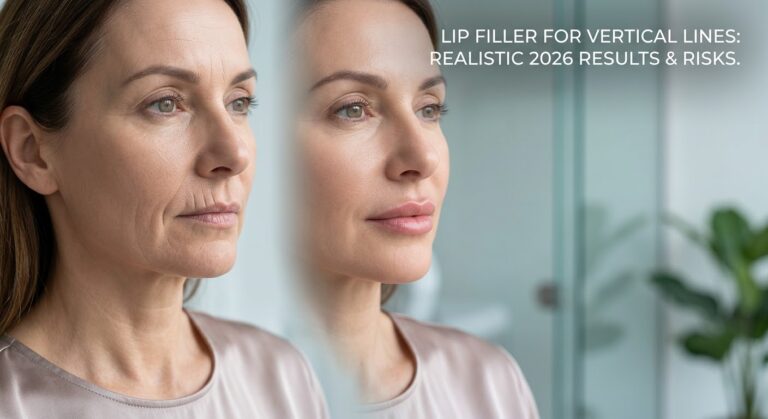
Older patients may seek treatment to restore volume and definition lost with age.
Aging can affect both the lips and the skin around the mouth.
A treatment plan may therefore focus on more than lip size.
In some cases, filler can restore volume. In other cases, a surgical option such as
a lip lift may better address changes in the upper lip.
The best option depends on the person’s anatomy, skin changes, goals, and overall health.
What Are the Risks of Lip Enhancement?
Understanding the risks before treatment is just as important as understanding the benefits.
Potential problems with dermal fillers include:
- Swelling
- Bruising
- Redness
- Tenderness
- Pain
- Infection
- Lumps or nodules
- Asymmetry
- Filler migration
- Allergic reactions
- Skin discoloration
- Vascular occlusion
- Tissue death
- Rare vision complications
The FDA states that accidental injection into a blood vessel is the most serious
risk associated with dermal fillers.
What Is Filler Migration?
Filler migration means that filler material moves away from its intended injection site.
Migration can contribute to an unwanted appearance around the lips.
It is one reason treatment should be planned carefully rather than focused only on volume.
If you notice persistent swelling, unusual lumps, or changes that concern you,
contact your healthcare provider.
What Are the Warning Signs After Lip Filler?
Severe or unusual symptoms after lip enhancement require prompt medical attention.
Contact your provider immediately if you experience severe pain,
unusual skin discoloration, marked paleness, or other symptoms that concern you.
Cleveland Clinic specifically notes that extreme pain, pale skin, or purple discoloration
around the lips can be warning signs of a vascular problem.
Do not wait for a routine follow-up if you believe something is wrong.
Can Lip Filler Be Dissolved?
Many hyaluronic acid fillers can be dissolved using an enzyme called hyaluronidase.
This can be useful when a patient has an unwanted result or when a medical complication
requires the filler to be removed.
Dissolving filler should be performed by a qualified medical professional.
It is not a DIY treatment.
Cleveland Clinic notes that hyaluronidase can also affect naturally occurring hyaluronic
acid in the lips, so the lips may temporarily look thinner after dissolution.
How to Choose the Best Lip Enhancement Treatment
The best treatment depends on your goal, not on what is trending online.
If you want a temporary increase in volume, hyaluronic acid filler may be worth discussing.
If you want a permanent structural change to the upper lip, a lip lift may be more suitable.
If you want to use your own tissue and accept a more involved procedure,
fat transfer may be an option.
Your provider should explain the benefits, limits, risks, and alternatives before treatment.
Questions to Ask Before Lip Enhancement
A good consultation should feel like a medical discussion, not a sales pitch.
- What type of lip enhancement do you recommend for me?
- Why is this treatment suitable for my lips?
- What product will you use?
- How much filler will you use?
- What results should I realistically expect?
- How long should the results last?
- What are the common side effects?
- What serious complications should I know about?
- What happens if I do not like the result?
- How are complications handled?
- How much will the complete treatment cost?
- What aftercare will I need?
Why You Should Avoid DIY Lip Enhancement
DIY lip filler and needle-free lip enhancement devices can carry serious risks.
The FDA warns against using needle-free devices to inject dermal fillers.
These devices use pressure and may not provide enough control over where filler enters.
Serious injuries involving the skin, lips, eyes, and blood vessels have been reported.
Cleveland Clinic also warns about the risks of hyaluron pens, including infection,
scarring, tissue damage, and vascular complications.
Lip enhancement is a medical procedure when injectable filler is involved.
It should be treated that way.
Lip Enhancement vs Lip Augmentation
The terms lip enhancement and lip augmentation are often used interchangeably.
Both describe procedures designed to improve the appearance of the lips.
“Lip augmentation” can refer to surgical and non-surgical procedures.
“Lip enhancement” is often used more broadly to describe improving lip shape,
definition, or volume.
The exact wording matters less than understanding the treatment being offered.
Always ask what procedure, product, and technique will actually be used.
Lip Enhancement: Temporary or Permanent?
Temporary treatments offer flexibility.
Permanent treatments offer longer-lasting changes but involve greater commitment.
Hyaluronic acid filler is temporary and can often be dissolved.
Fat transfer can provide longer-lasting results, although the amount of surviving fat varies.
Lip lifts and implants are surgical options that create longer-term changes.
If you have never had lip enhancement before, discuss whether starting with a
temporary approach makes sense for your goals.
Also check: Lip Augmentation Surgery Before and After: Results, Recovery, Cost & Risks in 2026
Does Lip Enhancement Look Natural?
Yes, lip enhancement can look natural when the treatment is properly planned.
Natural-looking results usually depend on proportion, technique, product selection,
and the amount injected.
A good result should fit your face rather than copy someone else’s lips.
Before and after photos can help you understand a provider’s style.
Look for patients with similar starting features and similar goals.
How to Prepare for Lip Enhancement
Preparation starts with choosing the right provider.
Do not book treatment until you understand what will be injected and why.
Tell your provider about medications, allergies, previous filler treatments,
previous reactions, and any relevant medical history.
Follow your provider’s instructions about medications and supplements.
Do not stop prescribed medication unless your healthcare professional tells you to do so.
If you have a history of cold sores, tell your provider before lip injections.
Lip injections can sometimes reactivate cold sores.
What Makes Good Lip Enhancement Different?
Good lip enhancement is not simply about adding more filler.
It is about choosing the right treatment for the person’s anatomy and goals.
The provider should consider the upper-to-lower lip relationship, facial proportions,
lip border, Cupid’s bow, smile, and profile.
The treatment should also account for what happens when the lips move.
Lips are constantly changing shape when you speak, smile, eat, and make facial expressions.
This is why copying another person’s lip filler result rarely produces the same outcome.
Final Thoughts on Lip Enhancement in 2026
Lip enhancement gives people more choices than ever.
You can choose temporary filler, fat transfer, a lip lift, implants,
or simple cosmetic products depending on your goals.
For many people, hyaluronic acid filler is appealing because it can add volume
without surgery and can be adjusted over time.
But the treatment is still a medical procedure.
The product, injector, technique, and aftercare all matter.
If you are considering lip enhancement in 2026, start with your desired result.
Decide whether you want volume, definition, symmetry, restoration, or a structural change.
Then discuss the options with a qualified healthcare professional.
Do not choose an injector based only on price, social media popularity, or a dramatic before
and after photograph.
The strongest lip enhancement result is one that fits your face, matches your goals,
and keeps safety ahead of size.
Frequently Asked Questions About Lip Enhancement
What is the best lip enhancement?
The best lip enhancement depends on your goals. Hyaluronic acid filler is a common
non-surgical option, while lip lifts, fat transfer, and implants provide different
long-term options.
How long does lip enhancement last?
Duration depends on the treatment. Hyaluronic acid lip fillers commonly last around
12 to 18 months, while surgical procedures can provide much longer-lasting changes.
How much does lip enhancement cost?
The cost varies by treatment, provider, location, product, and amount required.
Injectable filler is generally priced differently from surgical lip enhancement.
Is lip enhancement painful?
Lip filler may cause brief stinging, pressure, or discomfort. Numbing creams and
local anesthetic can help reduce discomfort.
Is lip enhancement safe?
Lip enhancement can be performed safely by qualified medical professionals,
but injectable fillers have risks. These include swelling, bruising, infection,
vascular complications, and other rare serious problems.
Can lip enhancement look natural?
Yes. Natural-looking results depend on facial proportions, treatment planning,
product choice, injection technique, and the amount used.
Can lip filler be removed?
Many hyaluronic acid fillers can be dissolved with hyaluronidase when medically appropriate.
Other filler materials may not be reversible in the same way.
What is the difference between lip filler and a lip lift?
Lip filler adds volume beneath the skin. A lip lift is surgery that changes the position
of the upper lip and reduces the distance between the nose and upper lip.
Can lip enhancement fix thin lips?
Yes. Lip fillers and other treatments can increase the appearance of thin lips.
The treatment can focus on volume, definition, symmetry, or a combination of these goals.
How long does swelling last after lip enhancement?
Swelling usually improves over the first few days, but complete settling can take longer.
Your provider should tell you what recovery pattern to expect.
Can lip enhancement cause filler migration?
Filler migration is a recognized complication of dermal fillers.
If you notice persistent changes, lumps, or swelling, contact your provider for assessment.
Should I get lip enhancement before a major event?
Give yourself enough recovery time. Swelling and bruising can occur after treatment,
so having your first treatment immediately before a wedding or major event is not ideal.
Can I get lip enhancement if I am older?
Age alone does not determine whether lip enhancement is suitable.
A qualified provider should assess your health, facial anatomy, skin changes, and goals.
What should I look for in a lip enhancement provider?
Look for a qualified healthcare professional with appropriate training and experience
in facial injections or cosmetic facial surgery. Ask about the product, technique,
expected results, risks, and how complications are managed.
Medical and External Resources
For reliable information about dermal fillers, review the FDA’s guidance on dermal filler
benefits, approved uses, warnings, and potential complications.
The American Society of Plastic Surgeons also provides information about dermal fillers,
patient selection, procedure steps, recovery, and safety.
Cleveland Clinic provides patient information covering lip fillers, lip augmentation,
recovery, side effects, and filler dissolution.