Book Appointment Now

Lip Filler Before and After Black Women: Natural Results, Pictures, Costs and Safety in 2026
Lip Filler Before and After Black Women: Natural Results, Pictures, Costs and Safety in 2026
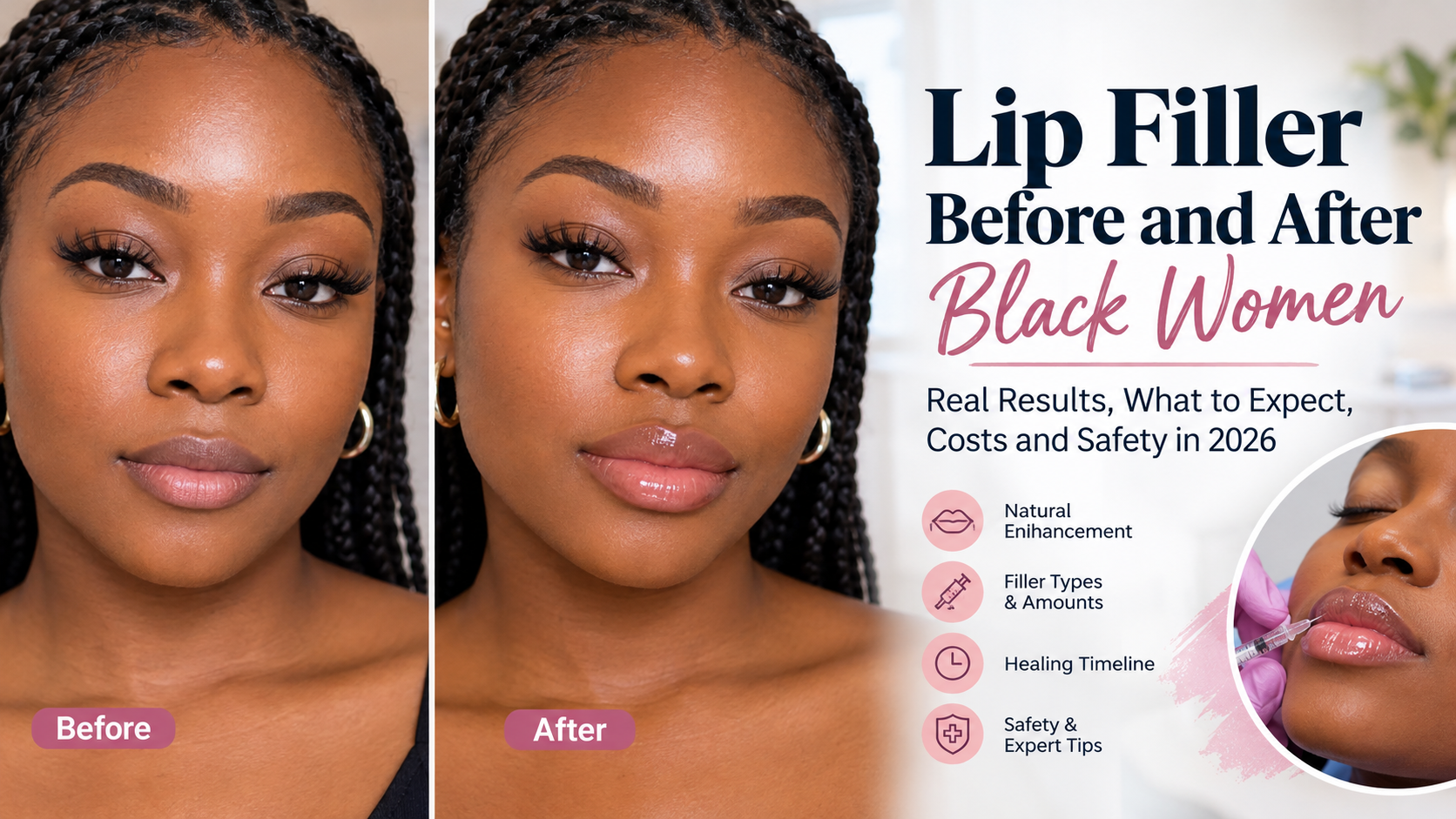
A small change in lip volume can make a noticeable difference to the way the lips look, but the best result isn’t always the biggest one. For Black women considering lip fillers, the goal may be a fuller lower lip, a more defined Cupid’s bow, better balance between the upper and lower lips, or a subtle enhancement that still looks like their natural lips.
Searching for lip filler before and after Black women should show more than dramatic transformations. You need to see how different lip shapes respond to treatment, what a natural result looks like, how long swelling lasts, and which safety issues deserve attention when treating melanin-rich skin.
Black women have a wide range of natural lip shapes, sizes, colours, and proportions. Some have naturally full lips and want sharper definition. Others want a modest increase in volume, while some are interested in softening age-related volume loss or improving the appearance of vertical lines around the mouth. There is no single lip shape that every patient should aim for.
This 2026 guide explains what lip filler before-and-after results may look like, how to assess treatment photographs, what different filler amounts can achieve, and how to choose a qualified injector. It also examines the medical evidence on dermal fillers in darker skin and the complications that every prospective patient should understand.
What Does Lip Filler Before and After Mean for Black Women?
Lip filler before-and-after results show the appearance of a person’s lips before treatment and after injectable filler has been placed to change their volume, shape, definition, or symmetry. For Black women, the comparison should account for the person’s original lip anatomy, natural pigmentation, facial proportions, treatment amount, and stage of healing.
Most modern lip fillers contain hyaluronic acid (HA), a substance that attracts water and helps add volume to soft tissue. A qualified healthcare professional injects the gel into selected areas of the lips according to the patient’s goals and the product’s approved uses.
The result can be subtle or more noticeable. A woman with naturally full lips might choose a small amount to refine the border. Someone with thinner lips might prefer a gradual increase in volume. Another patient may want to improve an imbalance between the upper and lower lips rather than make both lips substantially larger.
There is no reliable rule that Black women need more or less filler than women of other backgrounds. The appropriate amount depends on the individual’s anatomy, tissue characteristics, desired result, and the clinician’s assessment.
According to the US Food and Drug Administration’s dermal filler guidance, approved fillers can be used to increase lip fullness in eligible adults for specific indications. The agency also warns that fillers are medical products with potentially serious risks, even when used for cosmetic purposes.
What Can Lip Filler Before and After Pictures Show?
Good before-and-after photographs can help you understand the range of possible changes. They cannot tell you exactly how your own lips will respond, because each person’s anatomy, treatment plan, and healing process differ.
When reviewing lip filler pictures of Black women, look beyond the size of the lips. Pay attention to the shape, the balance between the upper and lower lip, the definition of the lip border, the appearance of the surrounding skin, and whether the result suits the person’s face.
1. Natural lip enhancement
Natural-looking lip filler results usually preserve the person’s original lip shape while adding a modest amount of fullness. The upper lip may look slightly more defined, the lower lip may appear rounder, or the lips may look more balanced when viewed from the front.
This approach may appeal to women who want people to notice that their lips look refreshed without immediately assuming they have had a cosmetic procedure.
2. Fuller upper and lower lips
Some patients want a more visible increase in volume. An injector may distribute filler between the upper and lower lips according to the person’s anatomy and treatment goals.
The upper lip does not automatically need the same amount as the lower lip. An appropriate plan should consider the existing proportions, lip movement, and how the result will look when the person smiles and speaks.
3. A more defined Cupid’s bow
The Cupid’s bow is the curved outline in the middle of the upper lip. Carefully planned filler placement may improve its definition in suitable patients.
However, adding volume to this area without considering the surrounding lip tissue can create an unnatural outline. Better definition should not come at the expense of balanced proportions.
4. Improved lip symmetry
Many people naturally have one side of the mouth that looks slightly different from the other. Filler may help improve some forms of asymmetry, although perfect symmetry is neither realistic nor necessary.
A skilled clinician should distinguish between a small difference in lip volume and asymmetry caused by muscle movement, dental structure, scarring, or another underlying factor. Not every difference can or should be corrected with filler.
5. Softer age-related changes
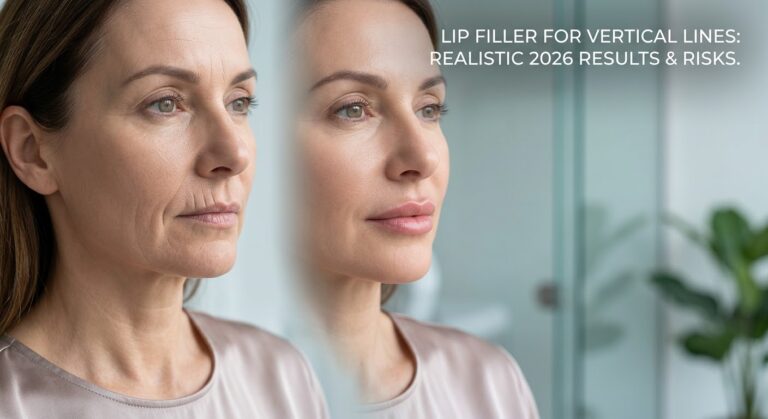
Some Black women seek lip fillers because their lips have become less full with age. Others notice vertical lines around the mouth or a change in the definition of the lip border.
Depending on the cause, filler may restore some lost volume or soften selected lines. It will not correct every concern around the mouth, and excessive volume can sometimes make the area look heavier rather than younger.
How to Compare Lip Filler Before and After Pictures Fairly
Before-and-after photographs can be useful, but only when the comparison is honest. A photograph taken immediately after injection may show considerable swelling, while a photograph taken several weeks later may show a more settled result.
Use the following checklist when examining a clinic’s patient gallery.
- Check the timing. Look for photographs taken before treatment and after the initial swelling has subsided.
- Compare similar angles. Front-facing photographs are easier to compare when the head position and camera distance are similar.
- Look at the lighting. Different lighting can change the apparent colour, contour, and fullness of the lips.
- Examine the relaxed lips. A photograph with the mouth closed can reveal different details from one taken while smiling.
- Look for natural proportions. Consider whether the upper and lower lips fit the person’s facial features.
- Check the image source. Prefer authentic, unaltered patient photographs with clear information about the treatment and timing.
- Ask about the amount used. If the clinic provides the filler volume and product name, you can better understand the treatment shown.
Be cautious when a clinic shows only extreme transformations, uses filters, or provides no information about when the photographs were taken. A dramatic result is not necessarily a better result, and an attractive photograph does not establish that the procedure was performed safely.
Also, avoid treating one patient’s result as a promise of what you will achieve. Two women receiving the same volume of filler may have different outcomes because their starting lip size, tissue structure, and treatment plans differ.
Why Lip Filler Results Can Look Different on Black Women
Black women do not share one lip shape or one skin tone. Natural lip fullness, the definition of the vermilion border, the colour of the lips, facial proportions, and the amount of visible lip tissue vary considerably between individuals.
These differences matter when planning treatment. An injector should assess the person in front of them rather than follow a standard template based on race or ethnicity.
Natural lip size and shape
Some patients already have substantial lip volume but want better definition. Others have a smaller upper lip, a fuller lower lip, or a shape that changes considerably when they smile.
These features influence where filler might be useful. For example, a woman who wants a little more upper-lip definition may not need a large increase in overall volume. A woman who wants fuller lips may benefit from a gradual approach rather than having a large amount injected at one appointment.
Natural lip pigmentation
Melanin contributes to the colour of the lips and surrounding skin. Natural lip pigmentation is not a flaw that filler needs to correct.
Hyaluronic acid filler adds volume and changes contour. It does not bleach the lips or reliably change their natural colour. If your primary concern is uneven pigmentation, a clinician should assess the cause and discuss suitable options separately.
Injection-related inflammation can sometimes cause temporary or persistent colour changes. In people who are prone to post-inflammatory hyperpigmentation, inflammation or tissue injury may leave a darker mark after the initial problem has settled. This is one reason careful technique and appropriate aftercare matter.
A review published in the Journal of Clinical and Aesthetic Dermatology discusses cosmetic procedures in skin of colour and highlights the need to account for pigmentation and scarring risks when planning treatment. Its findings support individualized care, not the assumption that every person with dark skin will develop complications.
Skin tone and visibility of complications
Redness can be less obvious on some darker skin tones, while swelling, tenderness, warmth, or colour changes may be more useful clues that something is wrong. This does not mean complications are always difficult to detect, but it reinforces the importance of assessing the full range of symptoms.
Both the patient and injector should understand what normal healing looks like and which warning signs require urgent medical assessment.
Personal beauty goals
One woman may prefer a subtle result that preserves every aspect of her original lip shape. Another may want more visible volume. Both preferences can be valid.
The right treatment plan begins with a clear conversation about what you want to change and what you want to preserve. You should never feel that you need to copy a particular celebrity, influencer, or beauty trend to get a good result.
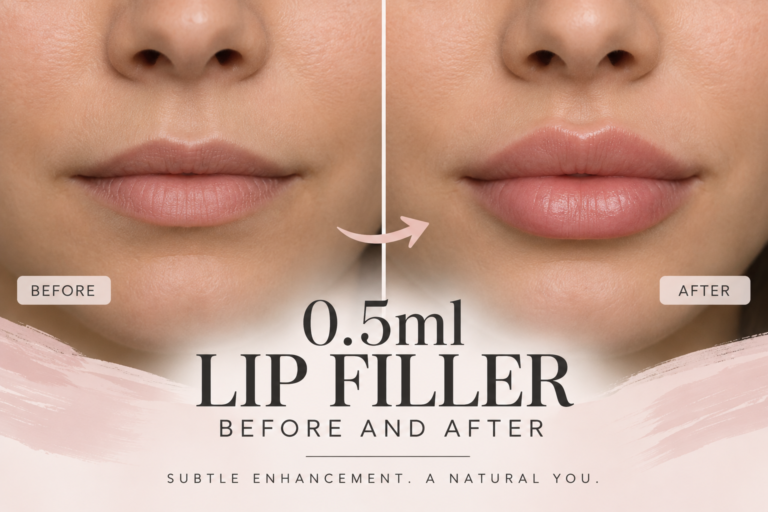
What Does 0.5ml Lip Filler Look Like on Black Women?
A half-millilitre treatment may produce a modest change in lip volume, although the visible result depends on the person’s starting anatomy and the way the filler is placed. It may suit someone seeking subtle enhancement, but it is not guaranteed to be invisible or appropriate for every patient.
For a woman who already has full lips, a small amount may be used to refine selected areas. Someone with thinner lips may see a more noticeable difference from the same volume. Neither outcome can be predicted from skin colour alone.
Who might consider 0.5ml?
- Someone seeking a restrained increase in fullness.
- A patient who wants to explore a gradual treatment approach.
- A person whose main goal is subtle contour refinement.
- Someone who wants to discuss a conservative first treatment with a qualified injector.
These are possible reasons to discuss a smaller treatment volume, not medical eligibility rules. A clinician may recommend a different plan or advise against treatment after examining the lips.
There is another detail worth understanding: the number printed on a syringe is not a reliable predictor of the final appearance. Placement, product characteristics, tissue capacity, and swelling all affect what you see.
Also Check: Lip Filler for Vertical Lines Before and After
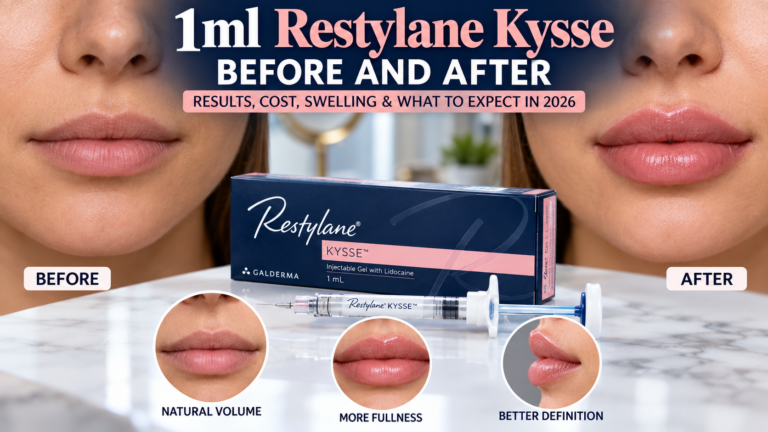
What Does 1ml Lip Filler Look Like on Black Women?
One millilitre is a common volume discussed in lip augmentation, but it does not produce one standard result. Depending on the person’s anatomy and the treatment plan, it may create a subtle change or a more noticeable increase in fullness.
For some patients, 1ml may be suitable for the desired outcome. For others, it may be more than the lips can comfortably accommodate in a single session. The correct amount should be decided through an individual assessment, not by choosing a number from a photograph.
Why 1ml can look different from person to person
Imagine two women receiving the same amount of filler. The first already has full lips and wants a little more definition. The second has thinner lips and wants greater volume throughout the upper and lower lips.
The first woman may experience a relatively subtle change, while the second may notice a larger difference. Even this example is only illustrative. The final result depends on the individual and cannot be guaranteed in advance.
It is also worth asking whether the proposed volume is intended for one appointment or a staged treatment plan. A clinician may prefer to make a conservative initial change and reassess the lips after healing rather than pursue maximum fullness immediately.
Which Lip Filler Types Are Used for Black Women?
Hyaluronic acid fillers are widely used for temporary lip enhancement. They are gels designed to add volume, and some products are specifically indicated for the lips. Different formulations have different characteristics, approved uses, and expected durations.
The right choice depends on the patient’s anatomy, treatment goal, product labeling, and the injector’s clinical judgment. A brand name alone does not guarantee a better result.
| Filler category | Potential purpose | What to understand |
|---|---|---|
| Hyaluronic acid filler | Adding temporary lip volume or improving contour | Results vary by product and individual; some HA fillers can be dissolved using hyaluronidase when clinically appropriate. |
| Filler selected for lip definition | Refining the border or creating a more defined shape | The product must be suitable for the intended area and used according to its labeling. |
| Filler selected for greater volume | Creating a more noticeable increase in fullness | More volume is not automatically better and can increase the risk of an unnatural result. |
The FDA’s list of approved dermal fillers explains that approval applies to specific products, indications, and treatment areas. Approval in the United States should not be confused with approval by regulators in Zambia, the United Kingdom, or another country.
Before treatment, ask for the exact product name, the amount to be used, and the reason the clinician recommends it. If you live outside the United States, check the relevant national regulator and the product’s authorization in your country.
Can Black Women Get Natural-Looking Lip Fillers?
Yes. Black women can achieve natural-looking lip enhancement with dermal fillers when treatment is carefully planned and performed by a qualified professional. The goal is to create a result that suits the person’s existing anatomy, not to impose a standard lip shape.
Natural results often depend more on planning and restraint than on the product name. A clinician should consider the lip border, upper-to-lower lip balance, the mouth at rest, facial movement, and the patient’s preferred degree of change.
How to explain your preferred result
Instead of telling the injector that you simply want bigger lips, explain exactly what you want to see. You might say that you want a little more upper-lip volume, a clearer Cupid’s bow, or a subtle increase that remains balanced with the lower lip.
Bring photographs that reflect your preferred level of enhancement, but use them to communicate your taste rather than demand an identical result. The injector should explain which parts of the example are realistic for your anatomy.
Why a conservative approach can help
Starting conservatively gives you and your clinician a chance to assess how the lips respond before considering additional treatment. It can also reduce the temptation to correct every small asymmetry at once.
That does not mean the smallest amount is always the safest or best choice. The important point is that the plan should be based on a medical assessment and a realistic goal, rather than pressure to achieve an extreme transformation.
How Lip Filler Treatment Works: Step by Step
A responsible lip filler appointment involves more than injecting a gel. It should include a health assessment, discussion of expectations, informed consent, product selection, a treatment plan, and clear instructions for follow-up care.
Step 1: Attend a consultation
The clinician should ask about your medical history, allergies, previous filler treatments, medicines, and any history of complications. Tell them if you have experienced cold sores, have an active infection, or have a tendency to develop raised scars.
You should also explain your goals and ask whether filler is likely to address your concern. If the main issue is pigmentation rather than volume, another treatment or no procedure may be more appropriate.
Step 2: Review your options
The injector should explain the proposed filler, its intended use, expected benefits, limitations, possible side effects, and likely duration. Ask whether the product is temporary and what options exist if the result is unsatisfactory or a complication develops.
Do not agree to a procedure if you do not understand what is being injected or who is responsible for managing complications.
Step 3: Agree on the treatment plan
The clinician should examine your lips and discuss the proposed volume and placement. A suitable plan should account for the existing shape and how the lips move when you talk or smile.
You should also agree on a realistic outcome. If you want subtle enhancement, say so clearly before treatment begins.
Step 4: Prepare for the procedure
The lips and surrounding skin are assessed and cleaned. Depending on the product and clinic’s approach, a topical or local anesthetic may be used to reduce discomfort.
Tell the clinician about medicines and supplements you take. Do not stop prescribed medicines without advice from the professional who manages them.
Step 5: Receive the injections
The injector places the filler into selected areas using an appropriate needle or cannula technique. The procedure often takes relatively little time, but speed should never be the priority.
Ask the clinician to explain the treatment before starting. You should not feel pressured to accept additional volume during the appointment if it differs from the plan you agreed to.
Step 6: Follow the aftercare instructions
Some swelling, tenderness, and bruising can occur after injection. The clinician should explain how to care for the area, which activities to avoid temporarily, and when to contact the clinic.
Do not massage or press the lips unless your injector specifically instructs you to do so. Avoid trying to correct an uneven result yourself.
Step 7: Attend follow-up if needed
Once the initial swelling has settled, the clinician can assess the result more accurately. If you have a concern, discuss it before booking more filler.
Additional treatment should never be automatic. It should be based on the healed result, your goals, and a professional assessment.
Lip Filler Healing Timeline: What to Expect Before and After
Lip filler results change during recovery. The lips may look larger immediately after treatment because of swelling, and their appearance can continue to settle over the following days. The precise timeline varies with the product, technique, and individual response.
| Time after treatment | What you may notice | What to do |
|---|---|---|
| First 24 hours | Swelling, tenderness, small injection marks, and possible bruising | Follow the clinic’s instructions and monitor for warning signs. |
| Days 2–3 | Swelling may remain noticeable, and the lips may look uneven temporarily. | Avoid judging the final result too early. |
| Days 4–7 | Swelling and tenderness often begin to improve, although bruising may remain. | Continue aftercare and contact the clinician if symptoms worsen. |
| Days 7–14 | Many routine injection-related effects have settled, but individual recovery varies. | Arrange assessment if significant swelling, lumps, pain, or asymmetry persists. |
| After the initial healing period | The shape is easier to assess once swelling has subsided. | Discuss the result with your clinician before considering further treatment. |
The American Academy of Dermatology’s filler FAQs explains that minor effects such as redness, swelling, tenderness, and occasional bruising often clear within seven to fourteen days, although recovery differs between patients.
Do not assume every symptom is part of normal healing simply because you recently had injections. Severe or increasing pain, unusual skin colour changes, or vision symptoms require urgent assessment rather than waiting for the expected recovery period.
Are Lip Fillers Safe for Black Women With Dark Skin?
Dark skin is not, by itself, a reason to rule out lip filler treatment. Available medical evidence suggests that hyaluronic acid fillers can be used in people with darker skin tones, but the evidence base specifically involving Black patients remains more limited than clinicians would ideally want.
A 2024 review in the Journal of Cosmetic Dermatology examined cosmetic injectables in skin of colour. It found that the available evidence generally supported the effectiveness and tolerability of these treatments, while also identifying a shortage of high-quality studies focused specifically on Black and Latino populations.
This distinction matters. It is reasonable to say that fillers can be suitable for Black women. It is not reasonable to promise that complications cannot occur or that the risks are identical for every person.
Post-inflammatory hyperpigmentation
Post-inflammatory hyperpigmentation (PIH) refers to darker patches that can develop after inflammation or injury. It can affect people of all skin tones, but it is a particular consideration for people who are prone to pigmentation changes.
Injection-related inflammation, bruising, or tissue injury may leave a temporary or persistent dark mark. A history of PIH is worth discussing before treatment so that the clinician can assess your risks and explain what can be done if discoloration develops.
Do not try to treat new discoloration with strong bleaching creams, acids, or unprescribed products without medical advice. Irritation can make some pigmentation problems worse.
Keloid and raised-scar concerns
Keloids are raised scars that extend beyond the original site of skin injury. If you have a personal history of keloids or hypertrophic scars, tell the clinician before receiving filler.
The FDA states that the safety of dermal fillers is not established in people prone to excessive scarring. This is a reason for careful assessment, not an excuse to assume that every Black woman is prone to keloids.
Bruising and swelling
Bruising and swelling are possible after filler injections. Their severity varies from person to person and may depend on the technique, the product, and individual factors.
Ask the injector how they plan to minimize unnecessary tissue trauma and how to recognize complications. A careful approach may reduce avoidable injury, but it cannot eliminate every risk.
Vascular occlusion
Vascular occlusion occurs when filler enters or obstructs a blood vessel and interferes with blood flow. This is an uncommon but serious complication that can cause tissue damage and, in rare cases, visual injury or blindness.
Seek urgent medical care if you develop severe or increasing pain, pale or unusual skin discoloration, mottled skin, or changes in vision after treatment. Do not wait for the next scheduled appointment.
The FDA’s medical guidance on dermal fillers explains the risk of accidental injection into blood vessels and other potential complications.
How to Choose the Right Lip Filler Injector
The skill of the injector is one of the most important factors in planning a safe, balanced result. Choosing someone because they offer the lowest price or have impressive social media photographs is not enough.
Look for a qualified healthcare professional who understands facial anatomy, has appropriate training in injectable treatments, uses legitimate products, and can recognize and manage complications.
Before booking, ask these questions:
- What is your professional qualification, and are you licensed or registered to perform this procedure here?
- How much experience do you have treating patients with darker skin tones?
- Can I see genuine, consented before-and-after photographs of patients with similar treatment goals?
- Which filler product do you recommend, and why is it appropriate for the lips?
- What are the risks for someone with my medical history?
- How do you respond to suspected vascular occlusion or another serious complication?
- What follow-up care is included in the treatment fee?
- Who should I contact if I develop a problem outside normal clinic hours?
Be wary of anyone who dismisses your questions, promises a risk-free procedure, or says that every patient needs a particular amount of filler.
In the United States, the FDA advises patients to use qualified healthcare professionals with appropriate knowledge of filler products, facial anatomy, and complication management. In other countries, check the professional’s registration and the local rules governing cosmetic injections.
How Much Do Lip Fillers Cost for Black Women in 2026?
The price of lip filler depends on the country, clinic, clinician’s qualifications, product, amount used, and follow-up arrangements. There is no separate medically justified price for Black women simply because of their skin colour.
In the United States, the American Society of Plastic Surgeons’ dermal filler cost information reports an average cost of $743 for lip augmentation with dermal fillers in its cited statistics. This is a US benchmark, not a universal price or a confirmed 2026 quote for every clinic.
Prices in Zambia, the United Kingdom, South Africa, and other markets may differ. Exchange rates, product supply, local regulation, and clinic costs can all affect the amount you pay.
| Cost factor | Why it matters |
|---|---|
| Filler product | Different products and formulations may have different prices. |
| Amount used | The treatment plan affects the total product cost. |
| Clinician’s expertise | Training, experience, and clinical facilities contribute to the fee. |
| Consultation and follow-up | Some clinics include these services; others charge separately. |
| Complication management | Ask what support is available and whether additional treatment would incur a fee. |
Ask for the full price before treatment rather than comparing clinics by the advertised cost of one syringe. A low price is not a bargain if the provider cannot verify the product or manage a complication.
If you are in Zambia, ask whether the product is authorized for use in the country, who is responsible for the injection, and what emergency support is available. Do not assume that a product’s US approval automatically establishes its regulatory status locally.
How Long Do Lip Filler Results Last?
Lip filler results are temporary when an absorbable product such as hyaluronic acid is used, but the duration varies by product and patient. The amount injected, the treatment area, and individual tissue characteristics may also influence how long the effect remains noticeable.
Some products may maintain visible effects for several months or longer. You should ask the clinician for the expected duration of the exact product being proposed rather than relying on a general promise about all lip fillers.
The FDA explains that dermal filler effects depend on the material and injection area. The agency also notes that different products have different expected durations.
Do not automatically book repeat injections at a fixed interval without an assessment. A clinician should evaluate the remaining filler, your appearance, and your goals before recommending additional treatment.
What Are the Risks of Getting Lip Fillers?
Lip filler treatment has potential benefits, but it also carries risks. Common temporary effects include swelling, tenderness, redness, and bruising. Other complications can include lumps, asymmetry, infection, allergic reactions, and persistent skin discoloration.
Rare but serious complications can occur if filler blocks a blood vessel. The risk of severe injury is one reason treatment should only be performed by an appropriately qualified professional with a clear plan for emergency care.
Another concern is overfilling. Repeated injections without a proper assessment can create a result that no longer matches the patient’s original goals. If you feel pressure to keep adding volume, step back and seek an independent medical opinion.
Before treatment, make sure you understand the possible complications and the limits of the proposed procedure. A signed consent form should reflect a genuine discussion, not simply paperwork completed before an injection.
Can Lip Fillers Be Dissolved?
Some hyaluronic acid fillers can be broken down with an enzyme called hyaluronidase when a qualified clinician considers it appropriate. It may be used to address certain unwanted results or complications, but treatment is not always simple and does not guarantee a perfect return to the original appearance.
Hyaluronidase is not a universal solution for every filler material. Non-HA products may be difficult or impossible to remove without other interventions, and dissolving treatment has its own potential risks.
Before your appointment, ask what product is being used and what options exist if the result is unsatisfactory. Never assume that all injectable fillers can be dissolved in the same way.
Common Lip Filler Mistakes to Avoid
Choosing a clinic based only on price
Cost matters, but it should not outweigh professional qualifications, product quality, and access to follow-up care. A cheap injection performed by an unqualified person can expose you to serious harm.
Expecting an exact copy of someone else’s lips
Reference photographs are helpful for communication, but your anatomy is different. The aim should be an outcome that suits you, not an exact replica of an influencer’s appearance.
Judging the result immediately
Early swelling can make the lips appear larger or less symmetrical than they will look after recovery. Follow the clinician’s guidance about when to assess the result.
Ignoring your medical history
Allergies, bleeding disorders, active infections, a history of severe allergic reactions, and a tendency to develop raised scars may affect treatment decisions. Disclose these details honestly.
Using unqualified injectors
Fillers should not be injected by unqualified individuals at home, in salons, or at informal events. Do not inject yourself or use needle-free filler pens. These methods can cause serious complications.
Adding more filler before the first treatment has settled
Repeated treatment too soon may increase the risk of an unwanted result. Allow the initial recovery period to pass and have the lips assessed before deciding whether further treatment is appropriate.
Are Lip Fillers Better Than Lip Plumping Gloss?
Not everyone who wants fuller lips needs injections. Lip-plumping glosses and makeup can create a temporary effect without the same medical risks associated with injectable fillers.
| Option | What it can do | Main limitation |
|---|---|---|
| Lip-plumping gloss | Creates a temporary fuller appearance through shine or a plumping effect. | Does not provide the same structural volume change as an injectable filler. |
| Lip liner and lipstick | Can visually define the border and create an impression of fuller lips. | Results depend on makeup technique and last until the makeup is removed. |
| Hyaluronic acid filler | Can add actual volume and alter lip contour. | Requires an injection procedure and carries medical risks. |
If you are unsure about injections, try makeup techniques first. They allow you to experiment with different shapes and levels of definition without committing to a medical procedure.
Who Should Be Cautious About Lip Filler Treatment?
Not everyone is an appropriate candidate for lip fillers. A clinician should assess your health, medical history, expectations, and the condition of the treatment area before deciding whether to proceed.
Tell your provider if you have an active infection or inflammation around the lips, a history of severe allergic reactions, a bleeding disorder, previous filler complications, or a tendency to develop keloids or hypertrophic scars.
The FDA states that filler safety has not been established during pregnancy or breastfeeding and in people under 22 for the products covered by its guidance. Specific product labeling and local regulations matter, so discuss these circumstances with a qualified clinician rather than relying on social media advice.
People who feel pressured to change their appearance or expect filler to solve wider personal problems may also benefit from taking more time before making a decision. Cosmetic treatment should be voluntary and based on realistic expectations.
Practical Tips for Better Lip Filler Results on Black Women
A good outcome starts before the injection. Careful planning, honest communication, and sensible aftercare can help you make a more informed decision.
- Define your goal. Decide whether you want more volume, sharper definition, improved balance, or help with age-related changes.
- Choose an experienced professional. Check qualifications, registration, product knowledge, and complication-management skills.
- Ask for a tailored plan. Your natural lip shape should guide treatment rather than a standard volume or template.
- Discuss pigmentation concerns. Mention any history of dark marks after inflammation, injury, or cosmetic procedures.
- Verify the product. Ask for its name, intended use, and regulatory status in your country.
- Understand the risks. Know the signs that require urgent attention and how to contact the clinic.
- Follow aftercare instructions. Do not use unapproved products or attempt to manipulate the filler yourself.
- Assess the healed result. Allow the initial swelling to settle before discussing further treatment.
The most useful question is not simply, “How much filler can I get?” It is, “What treatment, if any, is likely to achieve my goal without creating unnecessary risk?”
Final Takeaway: Choosing Lip Filler Before and After Results That Suit You
Lip filler before-and-after results on Black women can range from subtle definition to a more noticeable increase in fullness. The right result depends on individual anatomy, the patient’s goals, the product used, and the skill of the professional performing the procedure.
When reviewing photographs, look for authentic comparisons taken under similar conditions and after the initial swelling has settled. Do not judge results by volume alone, and do not assume that 0.5ml or 1ml will look the same on every person.
Melanin-rich skin is not a barrier to cosmetic treatment, but pigmentation changes, scarring history, and other individual risk factors deserve attention. Research the evidence, ask direct questions, and make sure you understand the product and the plan before agreeing to injections.
Your next step should be a consultation with an appropriately qualified healthcare professional who can assess your lips, explain realistic outcomes, and discuss the risks. If you decide to proceed, choose a treatment plan that respects your natural features and puts your safety ahead of dramatic before-and-after photographs.
Frequently Asked Questions About Lip Filler Before and After Black Women
1. Do lip fillers look natural on Black women?
Yes. Lip fillers can produce natural-looking results on Black women when the treatment is tailored to the person’s lip anatomy and goals. Natural results depend on careful planning and technique, not on skin colour alone.
2. Is lip filler safe for dark skin?
Hyaluronic acid fillers can be suitable for people with dark skin, but complications remain possible. Discuss your medical history, pigmentation concerns, and scarring history with a qualified healthcare professional before treatment.
3. Does 0.5ml lip filler make a noticeable difference on Black women?
It can. The visible change depends on the original lip size, filler placement, product, and individual response. A smaller amount may create a subtle result for one person and a more noticeable change for another.
4. Is 1ml of lip filler too much for Black women?
Not necessarily, but 1ml is not appropriate for everyone. The right volume depends on the person’s anatomy, desired outcome, and clinical assessment. More filler does not automatically mean better results.
5. Can lip fillers change the natural colour of dark lips?
Lip fillers primarily change volume and contour; they are not designed to lighten natural lip pigmentation. If your concern is uneven colour, seek an assessment to identify suitable options.
6. How long does lip filler swelling last?
Swelling often improves over several days, and many minor injection-related effects settle within seven to fourteen days. Recovery varies, and severe pain or unusual skin colour changes need urgent medical assessment.
7. Can lip fillers cause dark spots on Black skin?
Yes. Inflammation or tissue injury can sometimes cause post-inflammatory hyperpigmentation. Tell your injector if you have a history of dark marks after injuries or cosmetic procedures.
8. How much do lip fillers cost in 2026?
Prices vary by country, clinic, product, amount used, and clinician experience. Ask for a full quotation that includes consultation, treatment, follow-up, and any additional charges that may apply.
9. Can lip fillers be removed if I do not like the result?
Some hyaluronic acid fillers can be dissolved with hyaluronidase by a qualified clinician. Removal is not guaranteed to restore the original appearance perfectly, and other filler materials may be harder or impossible to remove.
10. How can I choose a safe lip filler clinic?
Check the practitioner’s qualifications and registration, ask about experience treating darker skin, verify the filler product, and confirm that the clinic can recognize and manage serious complications. Avoid unqualified injectors and home injection services.
11. How long do lip filler results last on Black women?
Results depend on the product, treatment area, and individual response rather than race alone. Ask the clinician for the expected duration of the specific filler and arrange reassessment before considering repeat treatment.
12. Can Black women get lip fillers if they have a history of keloids?
A history of keloids or hypertrophic scars should be discussed with the treating clinician before treatment. The FDA states that filler safety is not established in people prone to excessive scarring, so an individualized assessment is essential.